

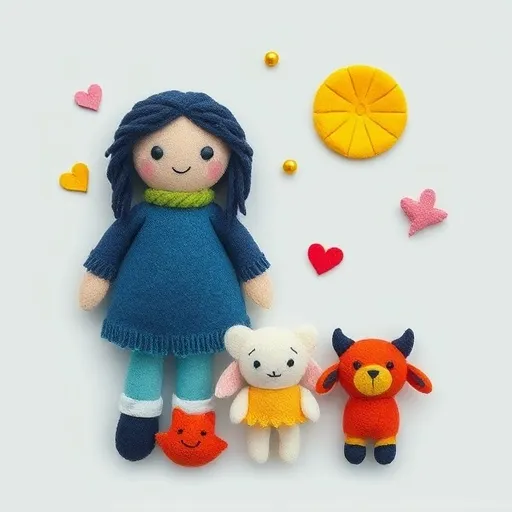
Handmade felt dolls
Why Handmade Felt Dolls Are Booming in 2026
There's something almost rebellious about choosing handmade felt dolls right now. In a world dominated by AI-generated art, one-click shopping, and same-day delivery, people are genuinely craving objects that feel human. A handmade felt doll takes hours — sometimes days — to complete. It carries imperfections. It has personality. And collectors, gift-givers, and craft enthusiasts have absolutely caught on.
According to industry insiders at several craft-focused marketplaces, searches for handmade felt dolls have climbed steadily over the past two years. The rise of the slow craft movement, the surging popularity of natural materials, and a growing appreciation for artisan goods have all converged to push handmade felt dolls into the spotlight like never before.
There's also the sustainability angle. Felt made from wool or other natural fibers is biodegradable, renewable, and often sourced from small farms or independent suppliers. For eco-conscious buyers, that matters deeply. A handmade felt doll isn't just a toy or a decoration — it's a small statement about how you choose to consume in an era of mass production.
What Exactly Are Handmade Felt Dolls and Why Do Collectors Love Them?
For anyone new to the term, handmade felt dolls are soft sculptures created from felt fabric or felted fibers, shaped into doll forms by hand. They can be as simple as a palm-sized pocket doll or as elaborate as a fully articulated art doll with layered clothing and embroidered facial features.
There are two main categories worth understanding:
- Needle-felted dolls: Created by repeatedly stabbing loose wool fibers with a barbed needle until they mat together into a solid shape. This needle felting technique allows for incredible detail and sculptural control.
- Sewn felt dolls: Made by cutting and stitching felt fabric (often wool felt or wool-blend felt) into patterns, then stuffing and assembling them. These tend to have a softer, more traditional doll look.
Many artisans combine both techniques, needle-felting the head and hands for detail while sewing the body and clothing from flat felt. The result is a hybrid that feels both sculptural and cuddly. That versatility is a big reason handmade felt dolls appeal to such a wide range of collectors.
Materials That Matter: Wool Felt, Roving, and Natural Fibers Explained
If you're buying or making handmade felt dolls, the materials make all the difference. Here's what to look for — or stock up on if you're crafting.
Wool felt is the gold standard. It's durable, takes embroidery beautifully, and has a natural warmth that synthetic felt alternatives just can't replicate. Synthetic felt (usually polyester or acrylic) is cheaper and comes in brighter colors, but it pills faster and lacks the same tactile appeal. For heirloom-quality handmade felt dolls, wool felt is the way to go.
For needle-felted dolls, you'll want clean, carded wool roving. Merino wool is popular for its softness and fine fibers, while Corriedale wool offers a bit more structure for sculptural work. Some artisans blend fibers to get the best of both worlds. Wool stuffing is a natural choice for sewn dolls, though some makers prefer synthetic polyfill for a loftier look. Wire armatures can be added for poseability, though this is more common in art dolls than in children's toys.
Embroidery floss is typically used for facial features — eyes, noses, mouths. A skilled artisan can create an entire personality with just a few stitches. Buttons, beads, and tiny fabric flowers are common embellishments, though safety considerations matter if the handmade felt doll is intended for young children.
The Crafting Process: From Wool Roving to Whimsical Art Dolls
Every handmade felt doll starts with an idea. Sometimes it's a sketch, sometimes it's a pile of wool roving in a particular color that inspires a character. From there, the process varies depending on technique, but here's a general flow:
- Design and pattern: The maker sketches the doll or drafts a pattern. For needle-felted pieces, this might just be a mental image and a rough armature.
- Core shaping: Wool fibers are shaped into the basic form — head, body, limbs. This is where the doll's proportions come to life.
- Detailing: Facial features, hair, and accessories are added. This stage often takes the longest.
- Clothing and finishing: Tiny garments are sewn or felted, then dressed onto the doll. Final touches like embroidery or beadwork complete the piece.
Depending on complexity, a single handmade felt doll can take anywhere from three hours to several weeks to complete. That time investment is exactly what makes each piece feel so special.
Collecting Handmade Felt Dolls: Quality Signals Every Buyer Should Know
If you're building a collection of handmade felt dolls, there are a few things that separate a well-made doll from a rushed one.
- Consistent stitching: Look for even, tight stitches. Loose or irregular stitching can indicate a beginner or rushed work.
- Clean felting: Needle-felted surfaces should be smooth and firm, not fuzzy or lumpy.
- Attention to detail: Embroidered faces, hand-sewn clothing, and thoughtful color choices all signal a skilled maker.
- Material quality: Wool felt and natural fibers age better than synthetics and hold their shape over time.
Many collectors focus on a specific style — woodland creatures, historical figures, fantasy characters, or minimalist modern dolls. Others collect by maker, following a particular artisan's work over time. Either approach works; the key is to buy what you love. The best handmade felt dolls are the ones that make you smile every time you walk past them.
Caring for Your Handmade Felt Doll: Storage, Cleaning, and Pest Prevention
Felt dolls are delicate by nature, but with proper care, they can last for decades. Here's how to keep yours looking its best:
- Keep them out of direct sunlight: UV rays can fade wool and synthetic fibers alike.
- Dust gently: Use a soft brush or a low-suction vacuum attachment.
- Spot clean only: Most felt dolls shouldn't be submerged in water. Use a damp cloth with mild soap for spots.
- Store properly: If you're putting a doll away, wrap it in acid-free tissue and store it in a cool, dry place.
- Watch for pests: Wool is attractive to moths. Cedar blocks or lavender sachets can help deter them.
If your handmade felt doll has movable parts or delicate embellishments, handle it with clean hands and avoid tugging on small pieces.
Making Your Own Handmade Felt Dolls: Beginner Tips for Needle Felting Success
Thinking about trying your hand at handmade felt dolls? Good news — it's one of the most accessible crafts out there. You don't need a studio full of equipment. A basic needle-felting kit, some wool roving, a foam pad, and a few needles will get you started for under the cost of a nice dinner.
Don't try to make a fully articulated art doll on your first attempt. Start with a simple ball-shaped figure — a little round creature or a basic peg doll. Get a feel for how the wool behaves. Faces are the hardest part. Embroidering a sweet, symmetrical expression takes practice. Make a few practice heads before committing to a full handmade felt doll.
Online craft communities, local fiber arts groups, and workshops are invaluable. Watching someone else felt in real time teaches you more than a dozen tutorials. And be patient — felt dolls take time. Rushing leads to lumpy shapes and uneven surfaces. Enjoy the process; that's kind of the point.
The Future of Handmade Felt Dolls: Heritage Techniques and Creative Crossovers
Looking ahead, the trajectory for handmade felt dolls seems bright. As more people seek out meaningful, sustainable, and personal objects, artisan-made dolls fit perfectly into that desire. We're also seeing interesting crossovers — augmented reality storybooks paired with physical dolls, custom portrait dolls commissioned as gifts, and collaborative projects where multiple artisans contribute to a single piece.
There's also a growing interest in heritage techniques. Younger makers are learning traditional felting methods from older artisans, keeping skills alive that might otherwise fade. That intergenerational exchange is one of the most beautiful things about the craft right now.
And while trends come and go, the appeal of a handmade felt doll is timeless. It's a small, soft, carefully made thing in a world that often feels loud and disposable. Whether you're buying your first handmade felt doll, adding to a growing collection, or picking up a felting needle for the very first time, you're participating in something genuinely special. The world of handmade felt dolls is warm, welcoming, and waiting for you.